In a landmark development for the global industrial landscape, two of Japan’s most formidable engineering powerhouses, Hitachi Ltd. and FANUC Corp., have announced a strategic partnership aimed at redefining the boundaries of automation. By integrating Hitachi’s advanced “HMAX” industrial AI platform with FANUC’s world-leading robotic systems, the companies are embarking on a mission to catalyze the maturity of “Physical AI”—the next frontier of the Fourth Industrial Revolution.
This collaboration marks a significant shift in how artificial intelligence is deployed on the factory floor, moving beyond mere data analytics to the physical manipulation of the environment. By utilizing Hitachi’s own manufacturing facilities as a "customer zero" testing ground, the partnership intends to bridge the gap between theoretical machine learning and practical, high-speed production environments.
Main Facts: The Intersection of HMAX and Robotics
The core of this partnership lies in the synthesis of two distinct but complementary technological ecosystems. Hitachi, long a leader in information technology and operational technology (IT/OT) convergence, brings its HMAX suite to the table. HMAX is designed to handle massive volumes of industrial data, turning granular machine metrics into actionable, real-time decision-making frameworks.
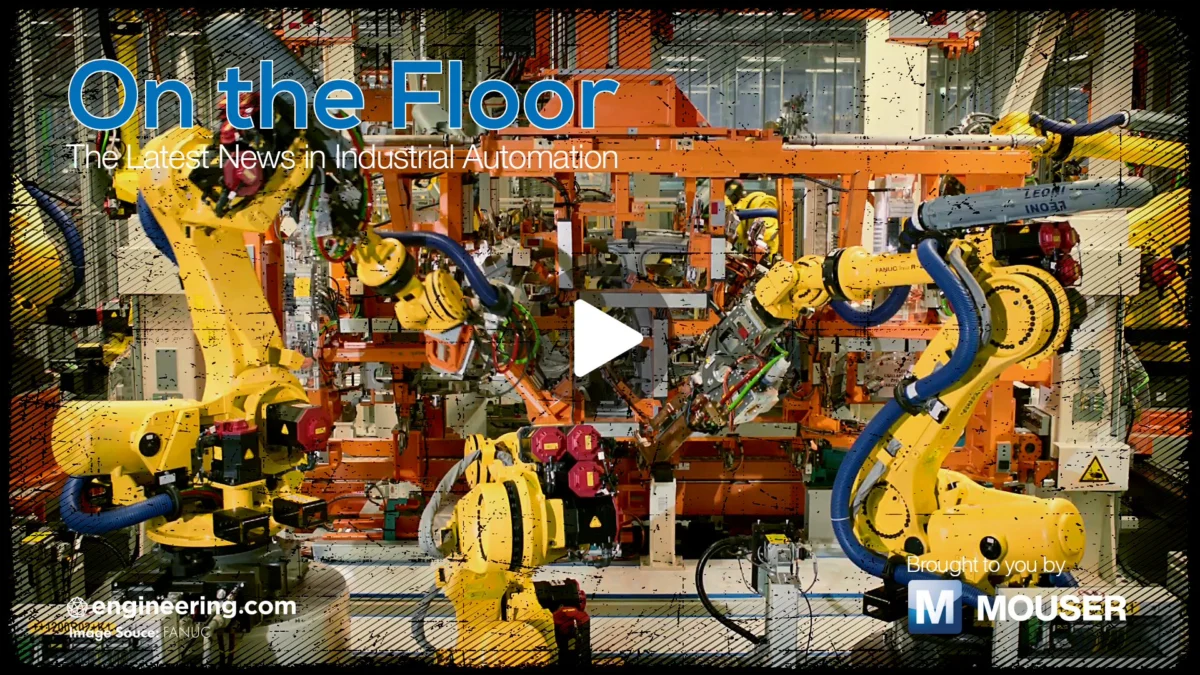
FANUC, conversely, holds a dominant position in the global robotics market. Known for their iconic yellow arms that power automotive assembly lines and electronics manufacturing worldwide, FANUC provides the hardware infrastructure—the sensors, actuators, and control systems—that facilitate precision movement.
Key Objectives:
- Intelligent Adaptability: Moving away from pre-programmed, static robotic movements toward systems that can perceive and react to varying object shapes and textures.
- Autonomous Changeovers: Reducing the downtime associated with retooling production lines by allowing AI to calibrate robotic grippers and paths automatically when a product SKU changes.
- Scalability: Creating a modular framework that can be deployed across diverse industrial sectors, from consumer electronics to heavy machinery manufacturing.
Chronology: The Road to Physical AI
The move towards this partnership follows years of independent research into AI-driven automation by both firms.
- Pre-2020: Hitachi begins aggressive investment in its Lumada platform and HMAX AI, focusing on predictive maintenance and supply chain optimization. FANUC simultaneously rolls out its "FIELD system" (FANUC Intelligent Edge Link and Drive), prioritizing data-driven robot health and performance monitoring.
- 2021–2023: As generative AI and Large Language Models (LLMs) capture global attention, the industrial sector recognizes a need for "Physical AI"—the ability for machines to navigate the physical world with human-like spatial reasoning. Both firms identify this as the critical bottleneck for the next decade of manufacturing growth.
- Q3 2024: Formal negotiations between Hitachi and FANUC accelerate. The firms conclude that their internal capabilities are complementary: Hitachi lacks the hardware dominance of FANUC, while FANUC requires the high-level cognitive software stack provided by Hitachi’s HMAX to achieve true autonomous dexterity.
- Late 2024: The announcement of the partnership. The roadmap is established to begin trials within Hitachi’s own production plants, utilizing them as a living laboratory.
Supporting Data: Why Physical AI Matters Now
The necessity for this collaboration is underscored by global macroeconomic trends. As labor shortages plague developed economies and the demand for high-mix, low-volume production increases, traditional industrial robots are reaching their limitations.
The "High-Mix" Challenge
Historically, industrial robots were designed for "low-mix, high-volume" environments—such as welding the same chassis on an automotive line millions of times. However, modern consumer demand requires rapid customization. Current statistics indicate that manual labor still accounts for roughly 40–60% of tasks in final assembly lines because robots struggle with picking parts that are randomly oriented or non-uniform in shape.
Efficiency Gains
Initial projections from industry analysts suggest that integrating AI-driven computer vision and tactile feedback into robotic controllers could result in:
- 25% increase in throughput: By minimizing "wait time" for human re-calibration during production changeovers.
- 40% reduction in error rates: By enabling robots to recognize "out-of-spec" parts before they enter the assembly process.
- Energy Optimization: Intelligent systems can modulate robotic speed based on the complexity of the task, reducing the overall carbon footprint of the factory floor.
Official Perspectives: Aligning Vision and Execution
While the partnership is technical in nature, the leadership at both Hitachi and FANUC has framed it as a strategic necessity for Japanese industry.
"The goal is not to replace the worker, but to replace the rigidity of the machine," noted a representative from Hitachi’s digital solutions division. By deploying the HMAX system into FANUC’s controllers, Hitachi aims to create a "digital twin" of the factory that can simulate and refine motions before the physical robot even moves. This reduces the need for trial-and-error physical programming, which is both time-consuming and costly.
FANUC, long known for its conservative approach to technological implementation, has emphasized the stability of this union. "Our robots provide the muscle, and Hitachi provides the brain," stated a FANUC spokesperson. "Our priority remains the reliability our customers expect, but by layering in HMAX, we are providing a level of cognitive flexibility that was previously impossible in a production setting."
Industry analysts have praised the "customer zero" approach. By testing these systems in-house, both companies are insulating their paying clients from the "growing pains" of early-stage AI deployment. Only once the algorithms have reached a high level of reliability within Hitachi’s own facilities will the technology be rolled out to the broader market.
Implications: The Future of the Factory Floor
The partnership between Hitachi and FANUC sends a ripple through the global robotics industry, particularly for competitors in the U.S. and Europe.
1. The Rise of "Autonomous" Factories
We are witnessing a transition from "automated" factories to "autonomous" factories. In an automated factory, the robot does what it is told. In an autonomous factory, the robot understands the goal and adjusts its methods to achieve it. This is the definition of Physical AI.
2. The Standardization War
By joining forces, Hitachi and FANUC are creating a de facto standard for AI-integrated robotics. This may force other companies, such as ABB, Yaskawa, or KUKA, to seek similar software-hardware partnerships. The competitive advantage will no longer be determined solely by the speed or payload capacity of a robot arm, but by the "intelligence density" of the software running the controller.
3. Impact on the Workforce
While some fear job displacement, the reality is more nuanced. The shortage of skilled labor in Japan and globally means that robots capable of handling complex, variable tasks will fill gaps that currently prevent companies from scaling. The human role is likely to evolve from "machine operator" to "system supervisor," overseeing fleets of autonomous robots rather than manually operating individual cells.
4. Broader Technological Synergy
The integration of HMAX and FANUC’s control systems is likely just the beginning. Future iterations may incorporate generative AI, allowing operators to issue instructions to robots in natural language (e.g., "Sort these components by color and stack them on the blue pallet"), which the AI will then translate into machine-readable code and precise motion paths.
Conclusion
The collaboration between Hitachi and FANUC is a definitive statement that the future of manufacturing is not just faster, but significantly smarter. By combining the vast industrial data-processing power of Hitachi’s HMAX with the unparalleled mechanical precision of FANUC’s robotics, the two companies are setting the stage for a new era of manufacturing efficiency.
As they refine their processes within the "customer zero" framework of Hitachi’s factories, the global manufacturing sector will be watching closely. If successful, this partnership could provide the blueprint for the next century of industrial productivity—a world where the physical and the digital are not merely connected, but are, for all intents and purposes, one and the same. The era of Physical AI has officially arrived, and it speaks Japanese.