





BIRMINGHAM, Mich. — For nearly a century, the industrial automation revolution has been built on a foundation of unyielding precision and predictable repetition. From the automated assembly lines pioneered in the early automotive age to the multi-axis robotic arms that dominate modern manufacturing plants, industrial robots have excelled at one primary task: doing the exact same thing, the exact same way, millions of times over.
That era of rigid, preprogrammed pathways is drawing to a close.
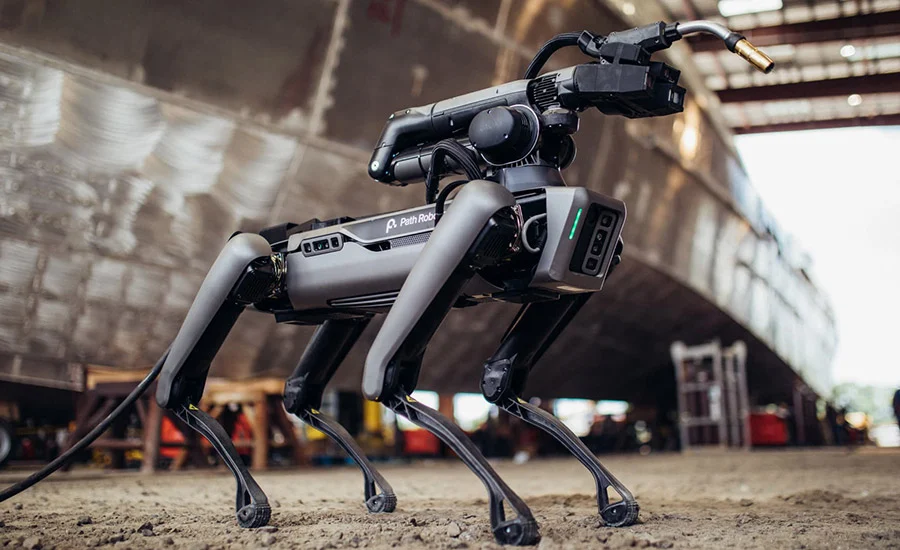
The convergence of artificial intelligence and physical machinery—widely known as Physical AI—is fundamentally altering the capabilities of industrial automation. No longer confined to rigidly controlled environments and exhaustive line-by-line coding, modern manufacturing robots are beginning to perceive variability, dynamically adjust their movements, and operate with unprecedented reliability in fluid production environments.
In a recent episode of Robots Today—a companion series to ASSEMBLY magazine’s broader documentary initiative, The Future Is Robotic—International Federation of Robotics (IFR) President Jane Heffner sat down to discuss the monumental shift occurring as physical AI transitions from theoretical research laboratories to active, high-volume factory floors.
"Physical AI and that shift, that’s real now," Heffner emphasized during the interview. "We’re seeing that on a daily basis and seeing that really become more profound in many different applications."
1. Main Facts: The Paradigm Shift in Industrial Robotics
The integration of advanced artificial intelligence into industrial hardware marks the most significant technological leap in factory automation since the introduction of the programmable logic controller (PLC).
- The Core Transition: Industrial robots are moving away from fixed, hard-coded trajectories and toward autonomous, perception-driven operations.
- Key Technologies: Advanced 3D machine vision, real-time spatial mapping, and cutting-edge vision-language-action (VLA) foundation models are driving the transformation.
- Industry Milestones: The International Federation of Robotics formally identified AI-powered autonomy as a defining, overarching robotics trend for 2026.
- Operational Impact: Manufacturers can now automate high-mix, unstructured tasks that previously demanded continuous human oversight, manual reprogramming, or bespoke engineering solutions.
According to Heffner, the rapid maturation of these technologies means that the conversation in manufacturing has shifted from if AI will impact assembly lines to how fast organizations can adopt it to remain competitive.
2. Chronology: From Blind Repetition to Autonomous Intelligence
To understand the weight of the current revolution, it is necessary to examine the evolutionary trajectory of industrial robotics over the past several decades.
Era 1: Blind Automation (1960s–1990s)
When George Devol and Joseph Engelberger introduced the "Unimate"—the world’s first industrial robot—to a General Motors plant in 1961, it operated strictly on magnetic drum memory. It repeated precise sequences of steps without any awareness of its surroundings. For the next three decades, industrial robots remained "blind" and "deaf." They required absolute physical consistency; if a part shifted by even a millimeter, the robot would collide with the workpiece or drop the component. Safety fencing was mandatory to protect human workers from these unpredictable, heavy machines.
Era 2: Sensor-Assisted Precision (2000s–2010s)
The turn of the millennium brought basic sensor integration. 2D cameras, laser displacement sensors, and force-torque feedback allowed robots to make rudimentary checks—such as verifying that a bolt was present or halting operations if an obstruction entered a light curtain. However, these systems still relied on rigid rule-based programming. Every potential variance had to be anticipated by a human engineer and explicitly coded into the system software.
Era 3: The Rise of Physical AI (Present Day)
We have now entered the era of Physical AI. Driven by exponential leaps in edge-computing power, deep learning neural networks, and sophisticated computer vision algorithms, modern robots no longer just execute commands—they perceive, reason, and act.
As Heffner noted, today’s systems can ingest massive streams of environmental data in real time, enabling industrial arms to locate shifting components, calculate optimal paths on the fly, and even teach themselves new tasks through observation rather than line-by-line coding.
3. Supporting Data & Technological Enablers
The transition to autonomous robotics is underpinned by several converging technological breakthroughs that solve long-standing bottlenecks in manufacturing engineering.
Real-Time 3D Vision and Dynamic Path Correction
Historically, presenting a robot with a bin of randomly oriented parts—known in the industry as "bin picking"—was a notoriously difficult engineering challenge. Traditional systems required structured lighting, specialized vibratory bowls, and extensive custom tooling to orient parts before the robot could grab them.

Today, advanced 3D vision systems map workspaces in milliseconds. Heffner pointed out that modern depth-sensing technology guides robots dynamically, allowing them to locate parts and actively correct their trajectories on the fly. This capability extends seamlessly to moving production lines, where robots can track, intercept, and assemble components on conveyor systems without requiring the line to pause.
Vision-Language-Action (VLA) Models and Learning from Demonstration
Perhaps the most disruptive development in physical AI is the emergence of foundation models and vision-language-action (VLA) models. In the past, deploying a robot arm for a new assembly task could take weeks or months of specialized programming by roboticists.
VLA models bridge the gap between human instruction and robotic execution. By watching a human operator perform a task just once—or by processing a natural language prompt combined with a video demonstration—a modern AI-equipped robot can parse the objective, map the physical requirements, and replicate the motion.
"They let a robot basically pick a task from a single demonstration instead of like months and months of programming, right?" Heffner explained. "And it can become real almost immediately."
4. Official Responses and Industry Perspectives
The International Federation of Robotics, representing the global robotics community, sits at the vantage point of these rapid developments. By highlighting AI-powered autonomy as its premier trend for 2026, the IFR is signaling that manufacturing is experiencing a structural realignment.
Industry leaders echo Heffner’s assessment that the barriers between software intelligence and heavy industrial machinery are evaporating. For years, the artificial intelligence boom was dominated by digital applications—large language models, generative design software, and data analytics. Now, the frontier has shifted directly to the physical world.
Manufacturing executives note that while digital AI improves supply chain forecasting and enterprise resource planning, Physical AI directly impacts gross margins on the factory floor by cutting setup times, reducing scrap rates, and minimizing downtime.
5. Implications for the Future of Manufacturing
The widespread deployment of physical AI carries profound implications for the global manufacturing sector, workforce dynamics, and economic competitiveness.
Expanding into High-Mix, Low-Volume Production
Traditionally, industrial automation was economically viable only for high-volume, low-mix production—such as automotive chassis welding or consumer electronics mass assembly. Factories producing customized goods, small batches, or frequently changing product designs had to rely almost entirely on manual labor because the cost of reprogramming robots for every design change was prohibitively high.
With physical AI enabling rapid adaptation and learning from demonstration, the economic calculus changes entirely. Robots can now be deployed in high-mix environments, handling short production runs and frequent product iterations profitably.
Mitigating the Labor Shortage
The manufacturing sector faces a persistent, global labor shortage, driven by an aging workforce and a widening skills gap. Physical AI does not merely replace labor; it bridges the gap between complex tasks and available workers. By lowering the programming barrier—turning hours of complex code into intuitive demonstrations or natural language commands—shop-floor technicians can oversee and reconfigure robotic cells without needing advanced degrees in computer science or robotics engineering.
Looking Ahead: Robots Today and The Future Is Robotic
As manufacturers navigate this transformative period, educational resources and industry insights are more critical than ever. Media platforms like ASSEMBLY magazine’s Robots Today examine the immediate, practical developments shaping robotics on the floor right now. Meanwhile, its companion documentary series, The Future Is Robotic—with new episodes released monthly on AssemblyMag.com—provides a broader, forward-looking strategic perspective on where the technology is headed over the next decade.
As physical AI continues to mature, the factory floor of tomorrow will look less like a rigid, automated cage and more like a collaborative, adaptive ecosystem where humans and intelligent machines work side by side to solve complex manufacturing challenges.