





By Global Logistics & Supply Chain Desk
Published: October 24, 2024
Executive Summary: Main Facts
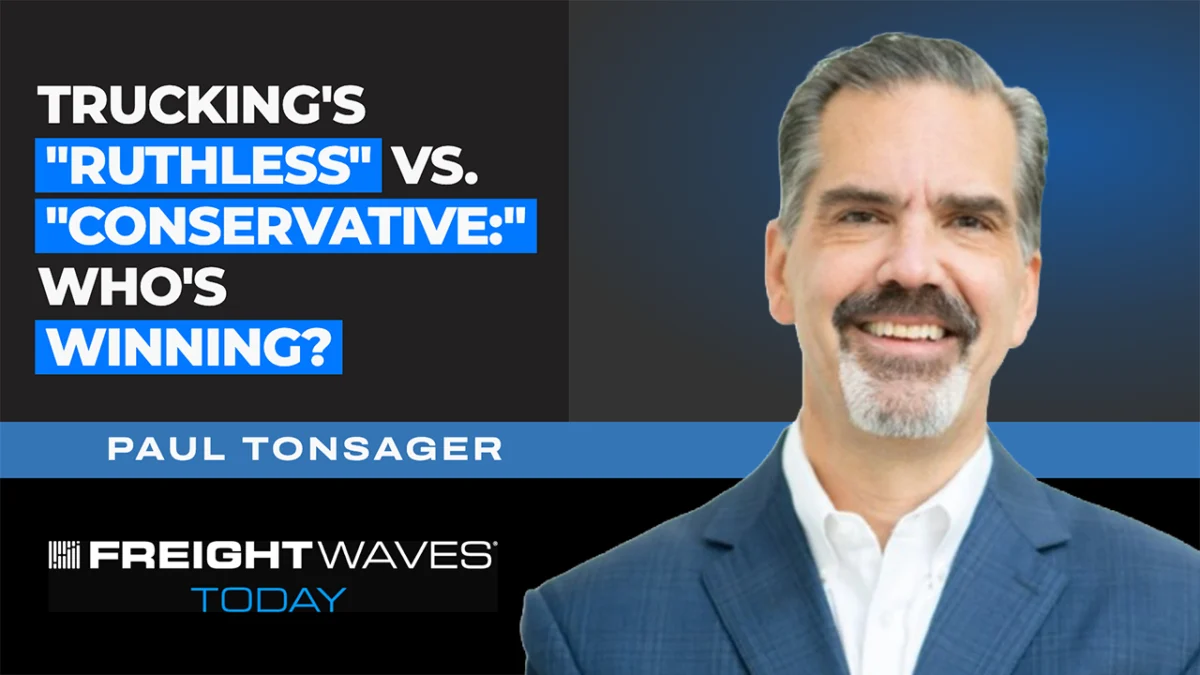
The American freight market is navigating a prolonged, lukewarm demand environment, but macro-level softness is affecting individual carriers in drastically different ways. A recent deep-dive discussion on FreightWaves Today featuring host Craig Fuller and Paul Tonsager—veteran railroad executive and CEO of Integrated Multimodal Solutions—illuminated a stark strategic divide between two of the nation’s logistics giants: Knight-Swift Transportation and J.B. Hunt Transport Services.
While J.B. Hunt relies on a conservative, customer-centric model anchored in dedicated and contract carriage, Knight-Swift has leveraged a historically aggressive, entrepreneurial approach. Knight-Swift’s operational agility—characterized by a willingness to shed unprofitable freight and pivot quickly toward spot and one-way markets—has yielded stellar performance metrics, including a reported 89 operating ratio (OR). Conversely, carriers with heavy contract and dedicated orientations are finding themselves waiting out traditional bid cycles to recoup intra-cycle cost inflations, such as rising driver wages.
Beyond the highway, the discussion expanded to the rail sector, assessing the high-stakes, regulatory limbo surrounding the proposed Union Pacific and Norfolk Southern merger. With regulatory headwinds, a ticking $2 billion breakup fee, and shifting political landscapes, the future of mega-consolidations hangs in the balance.
Chronology of Market Pressures and Strategic Pivots
To understand the current financial divergences in the trucking sector, one must examine how carrier cultures have responded to the post-pandemic freight recession and subsequent market cooling.
The Post-Boom Reality (2022–2023)
Following the historic highs of the 2020–2021 pandemic shipping boom, the freight market underwent a severe correction characterized by overcapacity, plunging spot rates, and persistent inflationary pressures on labor, equipment, and insurance. Most large truckload (TL) carriers initially held onto capacity, banking on a swift market recovery.
The Emergence of the "Ruthless" Pivot (Late 2023–2024)
As recovery proved elusive and the market settled into a prolonged "lukewarm" state, carriers faced a critical choice. Traditional models prioritized long-term shipper relationships and rate stability through multi-year contracts. However, operators rooted in the historical culture of Knight Transportation—prior to its massive merger with Swift—adopted a more tactical posture.
Knight-Swift demonstrated a willingness to walk away from unprofitable freight contracts. By refusing to absorb below-market rates, the carrier freed up assets to chase opportunistic gains in the spot and one-way markets. This tactical flexibility paid off handsomely during recent earnings cycles, setting benchmarks that have caught the attention of logistics veterans across both road and rail.
The Rail Horizon: The UP-NS Merger Timeline
In the intermodal and rail sectors, the timeline has been dominated by regulatory waiting games. It has now been more than a year and a half since the proposed Union Pacific and Norfolk Southern merger was formally announced. Despite the immense scale of the estimated $80 billion deal, the Surface Transportation Board (STB) has yet to hold a single formal hearing, creating a prolonged state of operational distraction and strategic uncertainty for employees and shippers alike.
Supporting Data and Financial Metrics
The divergence in carrier strategies is clearly reflected in operational metrics and market pricing tensions:
- The 89 Operating Ratio: Knight-Swift’s reported 89 operating ratio (meaning expenses consume 89% of revenues, leaving an 11% operating margin) is an elite figure. According to Paul Tonsager, such a ratio would turn heads even in the rail industry, where carriers tightly guard their carload business due to the structural difficulty of defending competitive intermodal margins.
- The 34% Rate Spread: A striking 34% pricing spread currently exists between spot truckload rates and contract intermodal rates. This gap illustrates the severe pricing tension and friction carriers must navigate as they balance shipper demands for cost stability against their own escalating operational overhead.
- Norfolk Southern Stock and Merger Valuations: Norfolk Southern shares have been trading consistently in the $330 to $332 range—comfortably above Union Pacific’s proposed offer price of approximately $320. This premium indicates that Wall Street places a higher probability on the deal eventually crossing the finish line despite regulatory hurdles.
- The $2 Billion Protection Policy: Should the transaction ultimately fail to secure regulatory approval, a breakup fee of roughly $2 billion is triggered. This clause provides Norfolk Southern with significant downside valuation protection, echoing historical structural safeguards seen in major telecom mergers, such as T-Mobile’s aborted tie-up with AT&T.
- Regulatory Oversight Commission: The fate of the multi-billion-dollar rail consolidation rests heavily on just four STB commissioners, operating within a shifting political environment that includes potential Democratic House gains.
Official Perspectives and Industry Expert Analysis
During their analysis on FreightWaves Today, Craig Fuller and Paul Tonsager unpacked the cultural philosophies driving modern logistics performance.
Paul Tonsager on Carrier Agility vs. Stability
Tonsager, drawing on decades of railroad leadership and his current role leading Integrated Multimodal Solutions, emphasized that corporate culture is just as important as macroeconomic conditions in determining financial success.
"The entrepreneurs will win in this market because they can move quickly to capture whatever gain they can get on price," Tonsager stated, contrasting the fleet-footed strategies of carriers like Knight-Swift with more rigid corporate structures.
Reflecting on his first-hand review of Knight-Swift’s earnings call, Tonsager expressed profound respect for their disciplined cost management. At the same time, he defended J.B. Hunt against overly harsh quarterly critiques, noting that Hunt maintains "the best mix, the best balance, and best consistent operations" among large-scale trucking operators. Hunt’s heavy reliance on dedicated and contract carriage means it absorbs intra-cycle cost pressures—such as sudden spikes in driver compensation—without immediate relief, having to wait for standard bid cycles to adjust rates upward.
Regulatory Warnings and Long-Term Risks
Shifting focus to the rail sector, Tonsager evaluated the odds of the Union Pacific and Norfolk Southern merger securing STB approval at roughly 55-45. However, he issued strong warnings regarding the prolonged regulatory process.
Beyond the financial security of the $2 billion breakup fee, Tonsager noted that the sheer length of the review process is an ongoing distraction for rank-and-file employees on both sides of the proposed merger. He cautioned that regardless of the final verdict, substantial operational concessions will likely be demanded. Furthermore, he warned that if the current administration ultimately rejects the mega-merger, it could effectively freeze railroad industry consolidation for a generation.
Broader Implications for the Supply Chain
The structural lessons emerging from the 2024 earnings cycle extend far beyond quarterly balance sheets, offering a glimpse into the future of North American logistics.
1. The Death of the "One-Size-Fits-All" Carrier Model
For years, scale was viewed as an absolute shield against market volatility. However, the contrast between Knight-Swift and J.B. Hunt proves that operational philosophy matters more than mere fleet size. Carriers that maintain rigid dedication to long-term contract structures risk margin erosion during prolonged down-cycles if they cannot swiftly pass along cost inflations. Conversely, hyper-disciplined operators capable of pruning unprofitable lanes and dynamically reallocating assets to spot markets are better positioned to protect their bottom lines.
2. Intermodal Pressures and Rail Competitiveness
With truckload-to-intermodal rate spreads hovering around 34%, intermodal providers face immense pressure. As Tonsager noted, rail executives traditionally covet carload freight because competitive intermodal margins are notoriously difficult to defend against aggressive highway competition. If rail operators cannot offer compelling value propositions against nimble truckload carriers, shippers may increasingly lean back toward over-the-road solutions.
3. The Chilling Effect on Corporate Consolidation
The protracted scrutiny facing the Union Pacific-Norfolk Southern proposal serves as a cautionary tale for transportation M&A. With regulatory bodies exercising heightened skepticism, multi-billion-dollar mega-mergers face unprecedented friction. If the deal fails, the resulting fallout—combined with potential political shifts—will likely deter future infrastructure consolidation efforts for decades, forcing railways to seek organic growth rather than inorganic expansion.
As the freight market continues its slow evolution toward equilibrium, shippers, brokers, and carriers alike must heed these lessons. In modern logistics, complacency is a liability, and adaptability remains the ultimate currency of survival.