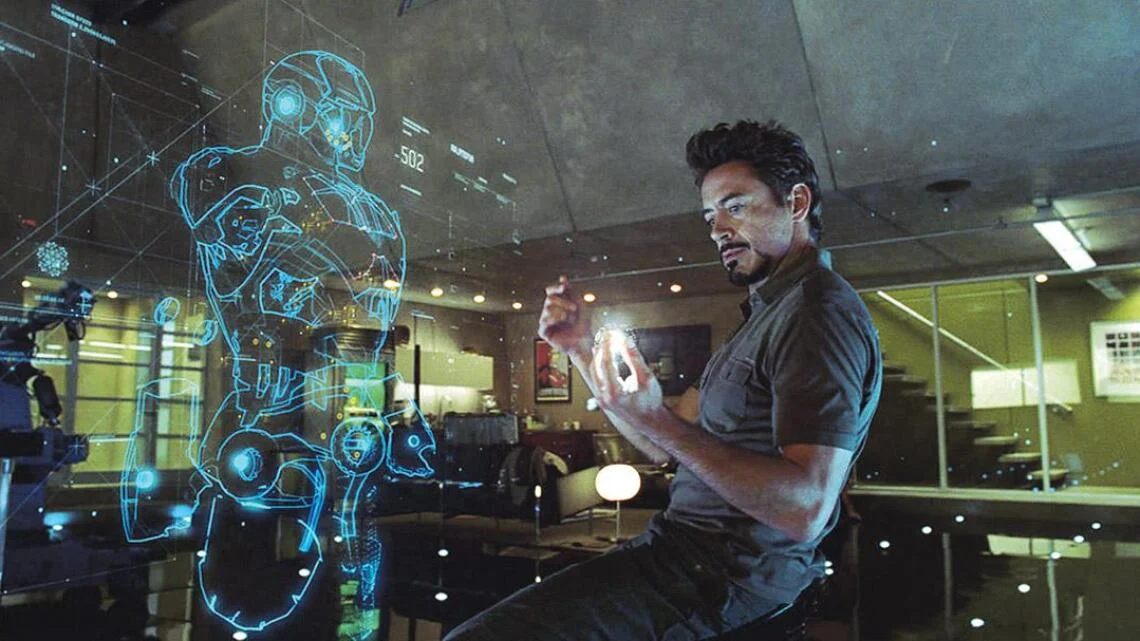
Imagine, for a moment, the workspace of Tony Stark. With a mere gesture of his hands, complex, holographic blueprints materialize in mid-air, allowing him to manipulate 3D components, simulate physical stress tests, and iterate on designs in real-time. For decades, this "J.A.R.V.I.S.-style" interaction remained the exclusive domain of science fiction. However, with the arrival of the Apple Vision Pro, that boundary between cinematic imagination and professional reality has effectively dissolved.
The Apple Vision Pro is not merely a piece of hardware; it is a fundamental shift in how we interface with digital information. By blending the physical environment with high-fidelity digital assets, Apple has introduced the world to "spatial computing." For product designers, mechanical engineers, and 3D modelers, this device represents a seismic change in the methodology of creation.
Main Facts: The Anatomy of a Spatial Computer
At its core, the Apple Vision Pro is a high-performance computer contained within a wearable headset. Unlike traditional Virtual Reality (VR) systems that isolate the user from their surroundings, the Vision Pro is designed for Augmented Reality (AR) or "mixed reality." It maintains the user’s presence in the physical world while overlaying digital interfaces that respond to eye movement, hand gestures, and voice commands.
The device is anchored by a sophisticated dual-chip architecture. The M2 chip handles the heavy lifting of computational tasks and graphics, while the brand-new R1 chip is specifically dedicated to processing input from 12 cameras, five sensors, and six microphones. This hardware combination ensures that digital content appears to exist in the user’s physical space with near-zero latency, eliminating the motion sickness often associated with previous generations of headsets.
For the professional engineer, the significance lies in the display density. With more pixels than a 4K TV for each eye, the Vision Pro provides the visual fidelity required to inspect complex 3D CAD (Computer-Aided Design) models, identifying aesthetic nuances and structural flaws that would be invisible on a standard 2D desktop monitor.
A Chronology: From Concept to Spatial Reality
The trajectory of Apple’s spatial computing journey has been years in the making, rooted in decades of internal research and development.
- The Foundations (2015–2019): Apple quietly acquired several companies specializing in augmented reality, motion tracking, and 3D sensor technology. During this time, the company refined its ARKit framework, allowing developers to experiment with placing digital objects in physical spaces via iPhones and iPads.
- The Hardware Pivot (2020–2022): Internal rumors of a "reality headset" intensified. Apple began shifting its focus from mobile-based AR to a dedicated, high-end standalone device capable of handling professional-grade workloads.
- The Global Unveiling (June 2023): At the Worldwide Developers Conference (WWDC), Apple officially introduced the Vision Pro. The announcement was met with global fascination, marking the company’s first major new product category since the Apple Watch.
- The Standardized Shift (August 2023): Apple joined forces with Pixar, Nvidia, and Adobe to push OpenUSD as the universal language for 3D content. This was a critical step in ensuring that the Vision Pro would be compatible with industry-standard software.
- Market Launch (2024): The commercial rollout of the Vision Pro signaled the beginning of the "Spatial Era," inviting enterprise professionals to integrate the device into their design workflows.
Supporting Data: Why Spatial Matters for Professionals
The shift toward spatial computing is supported by a growing need for more intuitive interaction with data. According to industry analysts, the integration of 3D modeling into physical workspaces can reduce the time-to-market for complex engineering products by significant margins.
The OpenUSD Advantage
The collaboration between tech giants to standardize OpenUSD (Universal Scene Description) is the bedrock of this new ecosystem. By creating a common framework, these companies are ensuring that a 3D model created in SolidWorks or Maya can be seamlessly imported into an immersive environment for review. This eliminates the "file conversion nightmare" that has long plagued interdisciplinary teams.
Reducing Prototyping Costs
Physical prototyping remains one of the most expensive and time-consuming phases of product development. By utilizing the Vision Pro, design teams can visualize a product at a 1:1 scale in their actual working environment. This allows for early-stage ergonomics testing and aesthetic evaluations before a single dollar is spent on 3D printing or CNC machining. Studies indicate that companies adopting immersive visualization can reduce physical prototype iterations by up to 30%, significantly impacting the bottom line.
Official Perspectives and Industry Response
The reception from the professional design community has been one of cautious optimism followed by rapid adoption.
Industry leaders at Adobe and Nvidia have lauded the device for its "unprecedented clarity." In a joint statement during the development phase, representatives from the OpenUSD alliance noted, "Standardization is the key to scaling spatial computing. By allowing designers to work in a shared, virtual 3D space regardless of their specific software toolset, we are creating a more collaborative and efficient global workforce."
Critics, however, point to the high price point and the learning curve associated with a new input paradigm. Yet, Apple’s marketing focus has remained consistent: this is a tool for the "prosumer" and the professional engineer. They argue that the productivity gains achieved through faster collaboration and better spatial awareness far outweigh the initial investment costs.
Implications: The New Era of Design Engineering
The implications of the Apple Vision Pro for the engineering industry are profound. We are witnessing a transition from "looking at" designs on a flat, glowing rectangle to "living within" the design process.
1. From 2D Constraints to 3D Freedom
For decades, designers have been constrained by the 2D limitations of the computer screen. Moving a mouse to navigate a 3D model is an abstraction; using your eyes and hands to reach out and rotate a virtual engine block is an intuition. This shift lowers the cognitive load required to understand complex spatial relationships, allowing engineers to focus on the problem-solving aspect of their work rather than the navigation of their software.
2. Global Collaboration Redefined
Imagine a mechanical engineer in Detroit and an industrial designer in Milan collaborating on the same 3D model in real-time. With the Vision Pro, they can both stand in a shared virtual workspace, pointing at the same components, discussing material finishes, and making real-time edits. This eliminates the latency of screen-sharing meetings and the ambiguity of 2D renders.
3. Sustainability through Digital Twins
As we move toward more sustainable manufacturing practices, the ability to create high-fidelity "digital twins" of products becomes essential. The Vision Pro allows teams to run simulations and perform maintenance training in a virtual environment, minimizing the waste associated with trial-and-error physical construction.
4. Continuous Learning
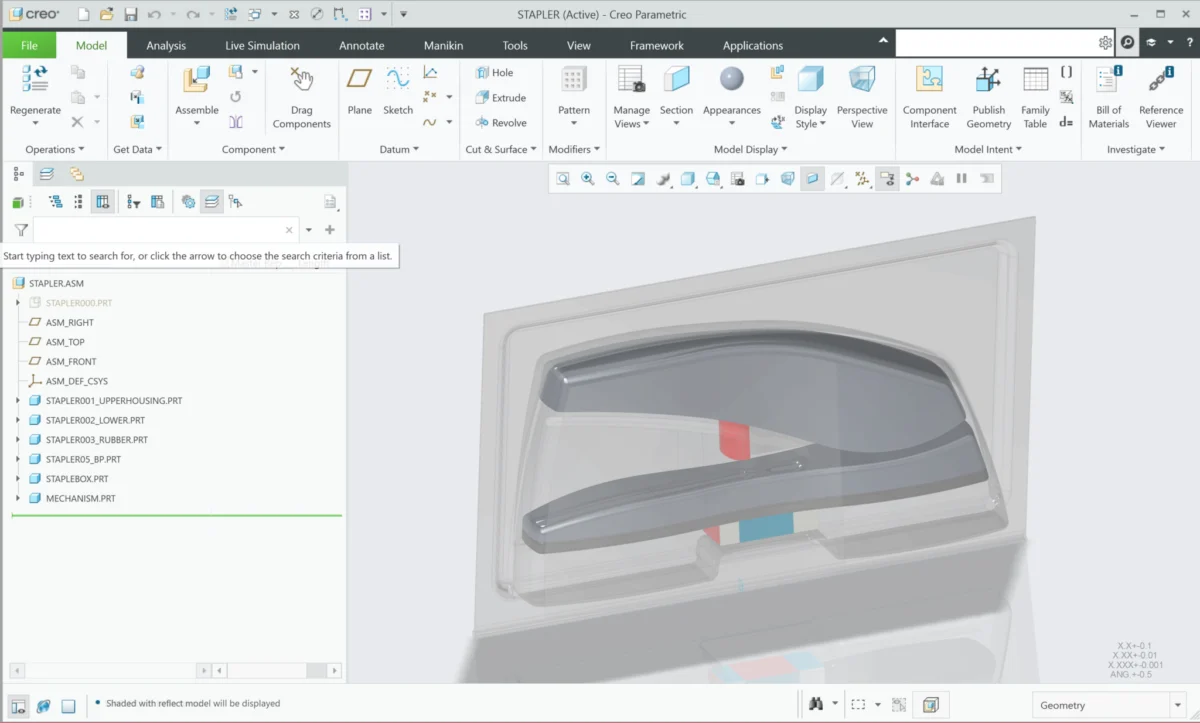
The necessity to adapt to these tools is becoming a competitive imperative. Professionals who embrace spatial design today will be the ones who define the standards for tomorrow. Organizations like Design Engine have recognized this shift, offering specialized training courses to help designers bridge the gap between traditional CAD expertise and the new requirements of spatial computing. Whether you are using Adobe, Maya, SolidWorks, or Creo, the ability to translate your current skills into a spatial environment is the next frontier of professional development.
Conclusion: A Catalyst for the Future
The Apple Vision Pro is a testament to the fact that the tools of our trade are constantly evolving. While it may seem like a futuristic luxury today, it is destined to become as essential to the modern engineer as the drafting table was to the architect of the 20th century.
By removing the barriers between the digital and the physical, Apple has provided a canvas that invites innovation. For the professional designer or engineer, the choice is clear: embrace the spatial revolution, refine your skill set through advanced training, and step into a future where your ideas are not just viewed, but experienced. The era of the spatial designer has officially arrived—are you ready to step into the workspace of the future?